How I Found Calm and Strength Through Qigong—No Gym Required
For years, I struggled with low energy, stress, and that constant feeling of being “wired but tired.” I tried intense workouts, supplements, even meditation apps—but nothing clicked. Then I discovered qigong, an ancient Chinese practice often overlooked in modern wellness circles. I started small: just 10 minutes a day. Within weeks, I noticed deeper sleep, sharper focus, and a calm I hadn’t felt in years. This isn’t magic—it’s movement with intention. Here’s how this gentle practice changed my life, and how you can start your own routine—anywhere, anytime.
The Modern Burnout Epidemic and Why Movement Alone Isn’t Enough
In today’s fast-paced world, burnout has become a silent epidemic. Millions of women between the ages of 30 and 55 juggle careers, family responsibilities, household duties, and personal expectations, often at the expense of their own well-being. Chronic stress is no longer an exception—it’s the norm. Many turn to exercise as a solution, logging hours at the gym or pushing through high-intensity interval training in hopes of reclaiming energy. Yet, despite physical exertion, they still feel mentally drained, emotionally frayed, and physically depleted.
The reason lies in the difference between physical fatigue and nervous system exhaustion. While traditional workouts strengthen muscles and improve cardiovascular health, they do not always address the deeper imbalances caused by prolonged stress. In fact, without proper recovery, intense exercise can add further strain to an already overtaxed system. The body remains in a state of sympathetic dominance—constantly alert, never fully at rest. This chronic activation disrupts sleep, weakens immunity, and clouds mental clarity.
This is where qigong offers a powerful alternative. Unlike conventional fitness routines that focus on output and performance, qigong emphasizes restoration, awareness, and balance. Rooted in traditional Chinese medicine, it operates on the principle that health depends on the smooth flow of vital energy, known as qi (pronounced “chee”). When stress, poor posture, or emotional strain block this flow, symptoms like fatigue, anxiety, and muscle tension arise. Qigong works gently to release these blockages, restoring harmony between mind and body. It is not about burning calories—it’s about cultivating calm, clarity, and resilience from within.
What Exactly Is Qigong? A Professional Breakdown
Qigong (also spelled “chi kung”) is a holistic practice that integrates slow, deliberate movements, coordinated breathing, and focused attention to regulate and enhance the body’s vital energy. The term itself comes from two Chinese words: qi, meaning life force or energy, and gong, meaning skill cultivated through regular practice. Together, qigong translates to “energy work” or “practice of vital energy.” For over 4,000 years, it has been used in Chinese culture to promote longevity, prevent illness, and support emotional balance.
Unlike aerobic exercise or strength training, qigong does not rely on intensity or speed. Instead, it uses gentle, flowing motions that are accessible to people of all ages and fitness levels. Movements are often circular, symmetrical, and repetitive, designed to open energy channels, improve circulation, and release tension. Each motion is paired with deep abdominal breathing and mental focus, creating a moving meditation that calms the mind while awakening the body.
While qigong shares similarities with tai chi and yoga, it has distinct characteristics. Tai chi evolved from martial arts and often involves longer, choreographed sequences. Yoga, originating in India, emphasizes postures (asanas) and flexibility, sometimes incorporating spiritual elements. Qigong, by contrast, is simpler and more adaptable, with shorter forms that can be practiced in limited space and minimal time. Its primary goal is not physical mastery but energetic balance and self-regulation.
Modern research supports what ancient practitioners have long known: qigong has measurable health benefits. Clinical studies have shown that regular practice can reduce cortisol levels, lower blood pressure, improve immune function, and enhance balance and joint mobility. It has been used as a complementary therapy for conditions such as chronic fatigue, fibromyalgia, and anxiety. Importantly, qigong is not a medical treatment but a preventive and restorative practice that supports overall well-being. By aligning breath, movement, and awareness, it creates a foundation for lasting health.
Why Qigong Works: The Mind-Body Science Behind the Practice
The effectiveness of qigong lies in its ability to engage the body’s self-regulating systems. At the core of its impact is the autonomic nervous system, which controls involuntary functions such as heart rate, digestion, and stress response. This system has two main branches: the sympathetic, responsible for “fight or flight,” and the parasympathetic, which governs “rest and digest.” Chronic stress keeps the sympathetic system overly active, leading to fatigue, insomnia, and mental fog. Qigong helps shift the body into parasympathetic dominance, promoting deep relaxation and recovery.
This shift is triggered by rhythmic, diaphragmatic breathing—a key component of qigong. When you breathe deeply into the lower abdomen, you stimulate the vagus nerve, the main pathway of the parasympathetic nervous system. This activation slows the heart rate, lowers blood pressure, and reduces the production of stress hormones like cortisol. Over time, this recalibrates the body’s stress response, making it easier to stay calm under pressure.
Equally important are the slow, mindful movements. These enhance proprioception—the body’s awareness of its position in space—which declines with age and inactivity. Improved proprioception leads to better balance, reduced risk of falls, and greater coordination. The gentle stretching and twisting motions also increase joint lubrication and muscle elasticity, making daily activities easier and less painful.
Mental focus is the third pillar of qigong’s effectiveness. By directing attention to the breath, the movement, or a specific part of the body, practitioners reduce mental chatter and rumination. This form of moving meditation has been shown to decrease activity in the default mode network of the brain—the area associated with self-referential thoughts and anxiety. As a result, many people report feeling more present, less reactive, and emotionally balanced after regular practice. The integration of these three elements—breath, movement, and mindfulness—creates a powerful synergy that supports long-term vitality.
Building Your Daily Qigong Routine: A Step-by-Step Plan
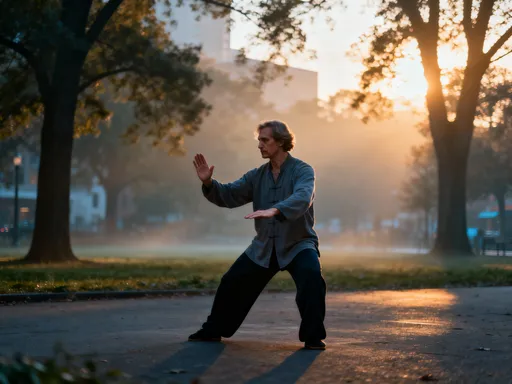
Starting a qigong practice does not require special equipment, prior experience, or a large time commitment. The key is consistency, not complexity. A simple 10- to 20-minute daily routine can yield significant benefits when practiced regularly. The following step-by-step plan is designed for beginners and can be done at home, in a quiet corner, or even outdoors in a park.
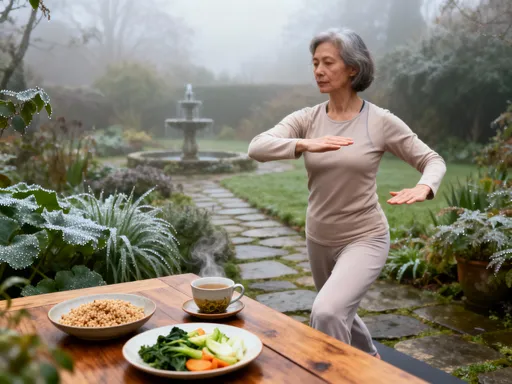
The first phase, lasting two weeks, focuses on foundational skills: posture and breath. Begin with the Standing Meditation (Zhan Zhuang), standing with feet shoulder-width apart, knees slightly bent, arms rounded as if holding a large ball. Keep the spine straight, shoulders relaxed, and chin slightly tucked. Breathe slowly and deeply into the lower abdomen. This posture builds internal awareness and grounding. Practice for five to ten minutes daily.
In weeks three and four, introduce gentle movements. The Lifting the Sky exercise involves raising the arms overhead on the inhale, as if lifting a weight, then lowering them on the exhale, visualizing energy descending through the body. This motion stimulates the central channel and improves energy flow. Next, try Separating Heaven and Earth, where one hand rises while the other sinks, creating a stretching sensation along the torso. This enhances spinal alignment and organ function.
Weeks five and six focus on flow and duration. Add the Bear Swings, a gentle rocking motion that loosens the hips and lower back. Stand with feet wide, knees bent, and let the arms swing naturally as you shift weight side to side. This movement releases tension in the pelvis and improves circulation. Gradually extend your practice to 15–20 minutes, combining two or three exercises in sequence.
For ongoing practice, create a personalized routine that feels nourishing. Some prefer morning sessions to awaken energy, while others benefit from evening practice to unwind. The most important factor is regularity. Even five minutes a day is more effective than an hour once a week. Over time, the body begins to remember the movements, and the practice becomes a natural part of daily life.
Common Challenges and How to Overcome Them
Beginning any new habit can be challenging, and qigong is no exception. Many women report initial skepticism, especially when the effects are subtle and gradual. Unlike a high-intensity workout that leaves you sweaty and energized, qigong may feel too gentle to make a difference. Others struggle with mental restlessness, finding it hard to focus during slow movements. Some worry they are “doing it wrong” or not seeing immediate results.
The most effective way to overcome these obstacles is to adjust expectations. Qigong is not about achievement; it’s about presence. Instead of measuring progress by physical changes, pay attention to small shifts—better sleep, reduced irritability, or a moment of calm during a hectic day. Keeping a simple journal can help track these improvements over time.
For those with busy schedules, integrating qigong into existing routines can increase adherence. Try practicing after waking, before showering, or during a midday break. Use a timer to stay consistent, starting with just five minutes and gradually increasing. If focus is difficult, try pairing the practice with soft instrumental music or nature sounds. Some find it helpful to follow online videos or apps with guided instruction until the movements feel familiar.
Physical limitations should not be a barrier. Qigong can be adapted for seated practice, making it accessible for those with joint pain, mobility issues, or chronic conditions. The emphasis is always on comfort and ease, not perfection. If a movement causes discomfort, modify it or skip it entirely. The goal is to support the body, not strain it. With patience and self-compassion, qigong becomes less of a chore and more of a cherished daily ritual.
Integrating Qigong into a Holistic Wellness Lifestyle
Qigong is most effective when it becomes part of a broader approach to wellness. While the practice itself offers profound benefits, its impact is amplified when combined with other healthy habits. Sleep, nutrition, hydration, and emotional self-care all play a role in sustaining energy and resilience. Qigong supports these areas by improving the body’s ability to rest, recover, and respond to daily demands.
For example, practicing qigong in the morning, especially in natural light, helps regulate the circadian rhythm, promoting better sleep at night. The slow breathing and gentle movement signal to the brain that the day has begun calmly, reducing morning anxiety. Evening practice, on the other hand, serves as a wind-down ritual, preparing the body for restful sleep by lowering heart rate and quieting the mind.
Nutrition also benefits indirectly. When stress levels decrease, digestion improves, and cravings for sugary or processed foods often diminish. Many women report making healthier food choices naturally after beginning qigong, not out of discipline, but because they feel more in tune with their bodies. This intuitive shift is a sign of improved mind-body connection.
Emotional balance is another key area of integration. Daily life brings constant stressors—work deadlines, family needs, unexpected challenges. Qigong builds emotional resilience by teaching self-regulation. Instead of reacting impulsively to frustration or overwhelm, practitioners learn to pause, breathe, and respond with greater clarity. Over time, this fosters a sense of inner stability, even amidst external chaos. It is not about eliminating stress, but about changing the relationship to it.
Long-Term Benefits and Realistic Expectations
The true power of qigong reveals itself over time. While some notice improvements in sleep or mood within weeks, the deeper benefits—increased vitality, mental clarity, and emotional equilibrium—develop gradually with consistent practice. This is not a quick fix or a temporary solution. It is a lifelong skill that grows richer with time, much like learning to play an instrument or speak a new language.
Long-term practitioners often describe a heightened sense of awareness—feeling more connected to their bodies, more present in daily life, and more capable of handling challenges with grace. They report fewer colds, more stable energy throughout the day, and a greater sense of peace. These outcomes are not the result of dramatic changes but of small, daily investments in well-being.
It is important to approach qigong with realistic expectations. It will not replace medical treatment for serious conditions, nor will it eliminate all stress. What it offers is a reliable tool for self-care—a way to reset, recharge, and reclaim a sense of control. It meets you where you are, whether you’re a busy mother, a working professional, or someone navigating life transitions.
Ultimately, qigong is about honoring the body’s need for gentle movement, mindful breathing, and quiet attention. It asks nothing of you except a few minutes a day and a willingness to slow down. In a world that values speed and productivity, this simple practice stands as a quiet act of resistance—a daily reminder that true strength comes not from pushing harder, but from being present, balanced, and kind to oneself. No gym, no equipment, no pressure—just you, your breath, and the timeless wisdom of moving with intention.